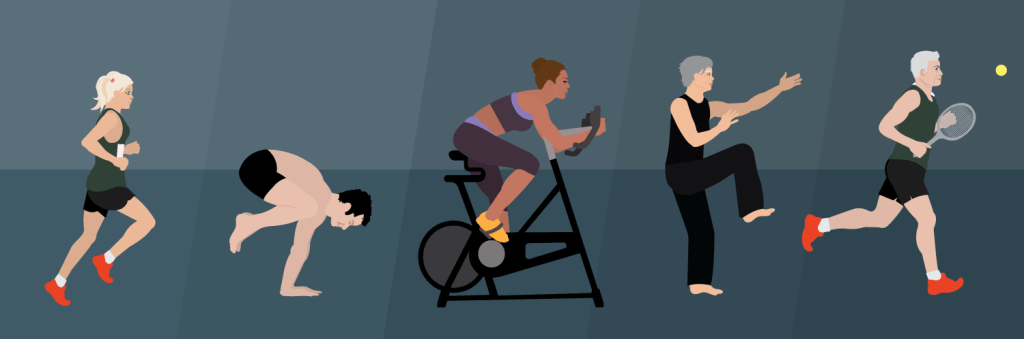
Staying active and engaging in regular exercise is essential for maintaining good health and well-being at any age. However, as we progress through different life stages, our fitness needs and capabilities change. This blog will discuss age-appropriate fitness tips for various life stages, ensuring you stay healthy and active throughout your life.
1. Childhood (4-12 years): At this stage, children should be encouraged to engage in a variety of physical activities, focusing on developing fundamental movement skills, balance, and coordination. These activities should be enjoyable and non-competitive.
– Play-based activities, such as tag or hopscotch
– Team sports, like soccer or basketball
– Swimming and gymnastics
– Jump rope and hula hoop
2. Adolescence (13-17 years): During adolescence, physical activity should focus on building endurance, strength, and flexibility. Encouraging teenagers to participate in organized sports or group classes can help them stay motivated.
– Aerobic exercise, like running or cycling
– Strength training with bodyweight exercises or resistance bands
– Yoga or Pilates for flexibility
– Recreational sports, such as skateboarding or dancing
3. Adulthood (18-64 years): For adults, it’s essential to find a balanced exercise regimen that includes cardiovascular, strength, and flexibility training. Aim for at least 150 minutes of moderate-intensity aerobic activity or 75 minutes of vigorous-intensity aerobic activity per week.
– Cardiovascular exercises, like brisk walking or swimming
– Strength training, using weights or resistance machines\Flexibility and balance exercises, like yoga or Tai Chi
– Group fitness classes for variety and motivation
4. Older Adults (65+ years): As we age, maintaining functional fitness becomes increasingly important. Focus on exercises that promote balance, flexibility, and strength to prevent falls and maintain independence.
– Low-impact aerobic activities, like water aerobics or walking
– Resistance training with light weights or resistance bands
– Balance exercises, such as standing on one leg or heel-to-toe walking
– Gentle stretching or yoga to maintain flexibility
To conclude, Incorporating age-appropriate exercise into your daily routine is crucial for maintaining optimal health and well-being throughout your life. By understanding the unique fitness needs of each life stage, you can create a personalized workout plan that supports your personal goals and abilities. Always consult with a healthcare professional before embarking on a new exercise program, and remember that consistency and enjoyment are the keys to long-term success.
 Mindful Musings