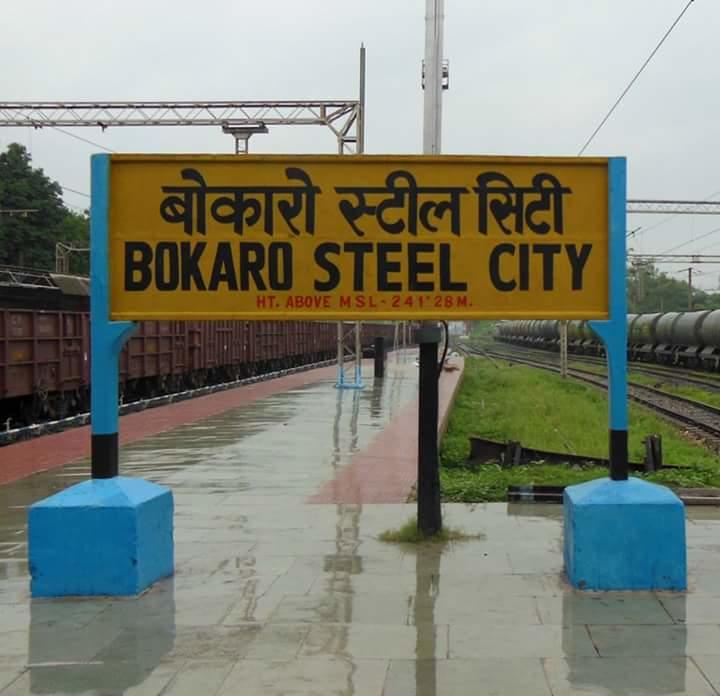
During my college years in Pune, Maharashtra, I would often be asked the question, “तुम्ही कुठून आहात” (where are you from?) and I would proudly respond, “मी बोकारो स्टील सिटीचा आहे” (I am from Bokaro Steel City). However, it was often challenging for people to grasp the exact location. While many were familiar with Jamshedpur, thanks to TATA’s presence there, Bokaro was relatively unknown. The city where we grew up, alongside our Russian friends (The steel plan which is one of the lrgest in India under SAIL was set-up in collaboration with Russian counterparts), was unheard of by many. This lack of recognition did make me somewhat uncomfortable. Nevertheless, I was immensely happy and proud to have been born and raised in that city. I was captivated by every aspect of it, from my school (St. Xavier’s) and friends to the medical facilities, playgrounds, and food joints. Everything about Bokaro fascinated me. The warmth of its people left a lasting impression on my heart from those days. One of my dad’s closest friends was Khan Chacha, who ran a scooter repair shop in the nearby local market. A person who follows the Muslim religion, which was never a significant factor or consideration for us, but my goodness, we had the most delicious Sewaiyaan (vermicelli sweet dish) at his house. We were always treated as part of the family. This is just one of the numerous stories of such relationships that you may have heard or witnessed in that city. This city possesses a special quality that brings together people from different cultures, and they all live in harmony. That was in the past, and now the city has become even more vibrant due to a significant increase in the population, particularly with migrant students who come to take advantage of its outstanding and esteemed academic institutions. Things may have changed for me since the time I viewed the city through the lens of a young boy in the early 1980’s to now in the mid-2020’s, but the impact it has on me remains the same, especially when I see the city’s sign as shown in the picture above. This has always been, is, and will forever be my home. My parents still reside there, and my father has spent over 50 years of his life in that city. As I write this, memories of my cherished experiences in Bokaro come flooding back to me. Bokaro is where my life resides, and it always will.
I am delighted today to have the opportunity to express the significance of Bokaro to me through my words, especially for all those friends and acquaintances who have asked me about the city at some point in time. Interestingly, even here in Dubai, I still receive that question, which is why I would like to share a glimpse of my city through my perspective.
Bokaro Steel City, located in the eastern Indian state of Jharkhand, is a city that blends the robustness of its steel industry with the richness of its cultural diversity. Often overshadowed by its industrial identity, Bokaro’s cultural fabric is a vibrant tapestry that is woven with threads of traditions, customs, and rituals from various communities and religions.
Located in the Chota Nagpur Plateau, Bokaro Steel City is home to one of the largest steel plants in India, established by the Steel Authority of India Limited (SAIL). However, beyond the towering chimneys and sprawling industrial landscape, there lies a city that I call HOME, teeming with cultural diversity.
The city, founded in the late 1960s, has attracted people from different parts of India who came here to work in the steel plant and allied industries. This influx turned Bokaro into a melting pot of cultures, where communities from Bihar, West Bengal, Uttar Pradesh, Punjab, Rajasthan, South India, and local tribes coexist harmoniously. The diversity is reflected in the city’s varied cuisine, festivals, dialects, music, and art forms.
Bokaro’s cuisine is a perfect example of its cultural amalgamation. From the spicy litti-chokha of Bihar, the delectable puchka (pani puri) of Bengal, to the rich dal-bati-churma of Rajasthan, and the savoury dosa and idli of South India, the city offers a culinary kaleidoscope that reflects its diverse population.
Festivals form the lifeblood of Bokaro’s culture. Durga Puja, Diwali, Holi, Eid, Christmas, Chhath Puja, Baisakhi, Pongal, and numerous tribal festivals are celebrated with fervour and enthusiasm by its residents. The city becomes a riot of colours, music, and dance during these celebrations, each reflecting the unique cultural nuances of the community it represents.
The city also has a rich linguistic diversity, with people speaking languages including Hindi, Bengali, Bhojpuri, Maithili, Punjabi, Rajasthani, Tamil, Telugu, Malayalam, Kannada and several tribal languages. This linguistic variety adds to the cultural richness of Bokaro, enabling its residents to learn and appreciate different languages and dialects.
Another feather in Bokaro’s cultural cap is its thriving local arts scene. The city is known for its rich tribal art, which includes forms like Sohrai and Khovar, traditionally practiced by the tribal women of Jharkhand. In addition, Bokaro also hosts a variety of cultural events and fairs that showcase local handicrafts, music, dance, and theatre, further promoting the city’s cultural diversity.
Bokaro Steel City, despite its industrial image, is a city that embodies the spirit of unity in diversity. Its unique blend of traditions and cultures, its celebration of various festivals, and its respect for different languages and art forms, make it a vibrant cultural hub. It is a testament to the fact that a city’s heart lies not just in its infrastructure and industries, but also in the rich tapestry of cultures that it nurtures and celebrates.
In essence, Bokaro Steel City is more than just an industrial town; it’s a living, breathing embodiment of India’s multicultural ethos, a melting pot of cultures that seamlessly blends the traditional with the modern.
Bokaro’s cultural mosaic is not limited to its festivals, cuisine, and languages. It also extends to its architecture and urban design. The city’s layout, with its wide roads and well-planned sectors, reflects modern urban planning principles. But interspersed within this modern cityscape, one can find older, traditional architectural styles in the form of temples, mosques, and churches, each bearing the distinct imprint of the community it belongs to.
Jagannath Temple, modelled after the famous Jagannath Temple of Puri, and Bokaro Ispat Pustakalaya, a prominent library, are just two examples of the city’s architectural diversity. The Garga Dam and Parasnath Hills, both popular tourist spots, further add to the city’s cultural and natural allure.
Education is another vital facet of Bokaro’s cultural identity. Home to several reputed educational institutions, the city is a melting pot of intellectual diversity as well. Students from different states, speaking different languages, studying varied streams, come together to create a vibrant academic culture.
The city also promotes sports and fitness, with several parks, sports complexes, and fitness centres spread across its length and breadth. Cricket, football, badminton, and athletics are popular among the city’s youth, and local tournaments are a regular occurrence.
Bokaro’s culture is not static; it’s evolving and growing, just like its steel industry. The city, with its diverse population, is continually absorbing new influences, adapting to change, while staying rooted to its cultural heritage. It is this dynamic nature of Bokaro that makes it a true melting pot of traditions and cultures.
Bokaro Steel City, with its myriad of cultures, traditions, languages, cuisines, and art forms, stands as a testament to the inclusive spirit of India. It is a city that welcomes diversity, cherishes it, and weaves it into its social fabric. It is a city that teaches us that while steel might be its backbone, its heart beats with the rhythm of diverse cultures and traditions.
So, the next time you think of Bokaro, don’t just picture a city of steel. Envision a vibrant cultural landscape, a city that thrives on diversity, a city that is a melting pot of traditions and cultures. Bokaro Steel City is not just an industrial hub; it’s a cultural powerhouse, a city that truly embodies the spirit of ‘Unity in Diversity’.
 Mindful Musings
Very well described,the real image of Bokaro Steel City. My father had joined here in 1965,December as Principal of the first Higher Secondary School,sector 3 of Bokaro, run by BSL.
LikeLike