The fascinating tapestry of Indian culture is woven with countless threads of diverse traditions, rituals, and festivals. Among these, the Kanwar Yatra stands out as a religious pilgrimage of great significance. This annual journey is a profound testament to the spiritual fervor and devotion that permeate the lives of millions of Hindus. I have been fortunate to see my parents travel year after year to Deoghar. My father continued for 5 years before he gave up but my mom was persistant and she continued till her knee gave up (almost 22 years in a row) and post that in cars but till 2019 she went every year. I have seen her struggles the first time to the easy a few trips and years later. The stories she shared after she came back with sweets of the jouurney were nothing but fasinating. To be honest we used to wait for her to come back and share her story. That night when she was back we hardly slept. One reason was to see her after a week or so and the other were the stories of her survival during this nerve testing trip on bare foot. I couldnt have done it and still havent been able to but my mom is a rockstar like all of ours, m sure. The strength they can go to ensure their families happiness is unimaginable. I am truly blessed to have been able to witness this through her eyes. Here in this blog I am sharing excepts gathered over the years from her stories and listening to others on the significance, cultural impact and the reasoning behind. This is my way of thanking Lord Shiva for keeping my parents especially mom safe and all others who took this pilgrimage every year.
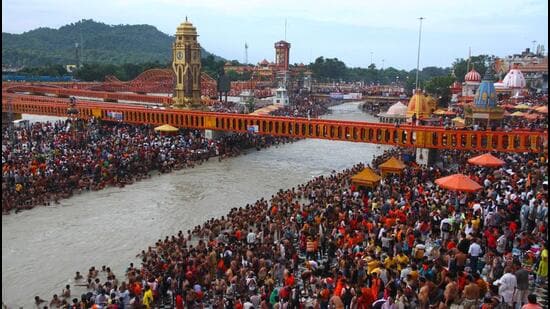
The Kanwar Yatra is a pilgrimage undertaken in the auspicious month of Shravan (July-August), according to the Hindu calendar. Devotees, known as Kanwariyas, embark on this journey to fetch holy water from the Ganges River, often from places like Haridwar, Gangotri, Gaumukh, or Sultanganj, carrying it in pots balanced on either end of a pole (the ‘Kanwar’) on their shoulders. This water is then offered to Lord Shiva, often at their local Shiva temples, but sometimes at specific temples like Vishwanath in Varanasi, Baidyanath in Deoghar, or Augharnath in Meerut.
The Kanwar Yatra is intimately tied to the worship of Lord Shiva, one of the principal deities in Hinduism, who is often depicted with the sacred Ganges flowing from his matted hair. The Shravan month is particularly significant as it is believed to be when the Samudra Manthan (the churning of the cosmic ocean) took place, leading to the emergence of the deadly poison Halahala, which Shiva consumed to save the universe. To soothe the effects of the poison, it is said that the gods showered water on him, a ritual reenacted by the Kanwariyas who offer Ganga Jal (water from the Ganges) to Shiva.
The significance of the Kanwar Yatra is multi-dimensional. On a personal level, it is an expression of bhakti (devotion) and austerities undertaken for spiritual purification and fulfillment of wishes. Many Kanwariyas travel barefoot, covering hundreds of kilometers, braving the monsoon weather – a testament to their unflinching faith and endurance. The journey is also a community event, with Kanwariyas traveling in groups, singing bhajans (devotional songs), and sharing food and shelter along the way. This strengthens communal bonds and promotes a spirit of unity and goodwill.
On a broader cultural level, the Kanwar Yatra is a living tradition that connects the present to the past, maintaining continuity with ancient practices and beliefs. It is an occasion when the spiritual and the mundane intermingle, and the divine is brought into the everyday realm. The journey itself is a metaphor for the human quest for the divine, the striving for moksha (liberation) from the cycle of birth and death.
The significance of the Kanwar Yatra also extends to environmental consciousness. The river Ganges is venerated as a goddess, and by extension, the pilgrimage is a reminder of the sanctity of nature and the importance of its preservation.
In summary, the Kanwar Yatra is a potent symbol of the spiritual, cultural, and environmental ethos of India. It is a divine trek that captures the essence of the human spirit – its capacity for faith, endurance, unity, and reverence for the natural world. As we witness the sea of saffron-clad Kanwariyas annually, we are reminded of the enduring power of faith that anchors these devotees. It is a testament to the human capacity for self-transcendence, for stepping out of the everyday mundane and reaching for something higher, purer, and ultimately divine.
Moreover, the Kanwar Yatra illuminates the importance of community and togetherness in spiritual practices. As groups of Kanwariyas trek together, sharing stories, songs, and sustenance, the Yatra transforms into a moving tapestry of shared experiences and collective memory. It builds bonds of camaraderie, brotherhood, and mutual respect among participants from different walks of life.
The Kanwar Yatra is also a powerful demonstration of the symbiotic relationship between spirituality and nature. The holy Ganges River, a lifeline for millions, is at the heart of this pilgrimage. The ritual of fetching and offering Ganga Jal is not just a spiritual act, but also a reminder of our dependence on and responsibility towards nature. It underlines the need for sustainable practices and conservation efforts to preserve such natural resources for future generations.
Lastly, the Yatra encourages introspection and self-improvement. The physical exertion, the adherence to strict codes of conduct, and the week-long focus on divine worship provide an opportunity for the Kanwariyas to contemplate their lives, actions, and spiritual goals. It is a time for them to realign with their higher selves, cleanse their minds, and commit to the path of righteousness.
In conclusion, the Kanwar Yatra is not merely a religious pilgrimage. It is a significant cultural phenomenon that encapsulates the quintessence of Indian spirituality. It reflects the resilience of faith, the power of communal harmony, the sacredness of nature, and the potential for personal growth and transformation. As the waves of saffron-clad Kanwariyas embark on their divine trek year after year, they continue to enrich the cultural and spiritual landscape of India, leaving behind footprints of devotion, unity, and reverence.
 Mindful Musings