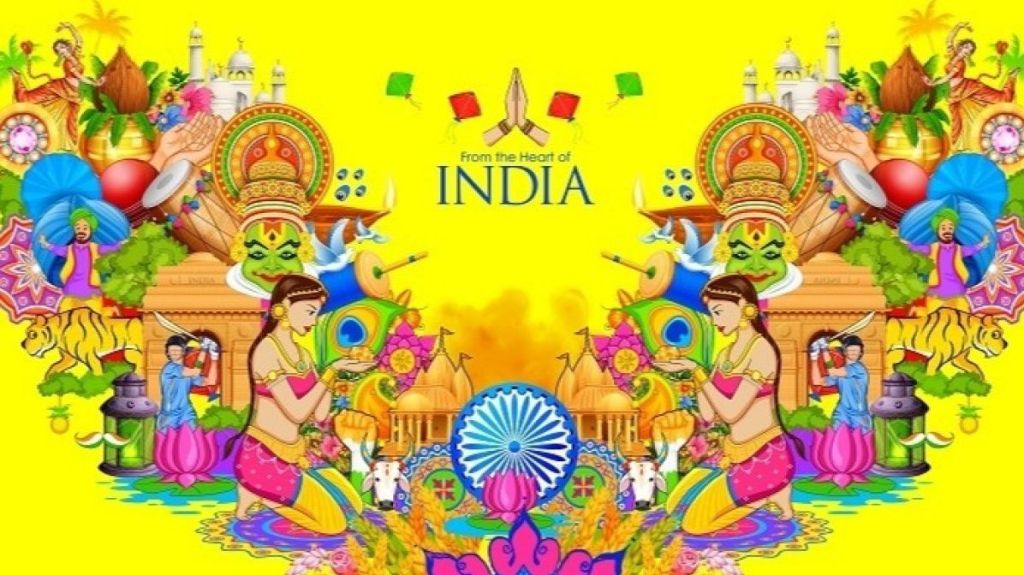
India, with its varied landscapes, countless dialects, and rich history, is a country that symbolizes a vibrant blend of diverse cultures. It is the epitome of a tapestry of cultural heritage, woven with threads of diverse religions, traditions, arts, and cuisines, making it a land of enchantment for history enthusiasts and cultural explorers around the globe. In this blog I would try to give an over-view of the Indian culture and anything more would need a book or two to describe in detail.
A Walk Through Time
India’s history is as multifaceted as its culture. It is the cradle of some of the world’s oldest civilizations, including the Indus Valley Civilization, which dates back to 2500 BCE. The historical monuments scattered throughout the nation bear testimony to the architectural brilliance of the bygone eras. The Taj Mahal, a UNESCO World Heritage Site, is a classic representation of Islamic architecture, while the intricate carvings of Khajuraho Temples and the majestic fortresses of Rajasthan reflect the finesse of ancient Indian artistry.
The Colors of Religion
Religion plays a pivotal role in the cultural heritage of India, home to a slew of religions such as Hinduism, Buddhism, Jainism, Sikhism, Islam, Christianity, and countless other faiths. Each of these religions has left an indelible imprint on the cultural ethos of the country. The Buddhist monasteries in Ladakh, the sacred ghats of Varanasi, the Golden Temple in Amritsar, the churches of Goa, and the grand mosques of Delhi, all echo the spiritual diversity of this vibrant nation.
A Symphony of Languages
India is a linguist’s paradise. With more than 2,000 distinct ethnic groups and over 1,600 spoken languages, it is a testament to the power of communication in shaping cultural heritage. Each language and dialect carries with it a rich literary tradition, offering a unique perspective on the region’s history, philosophy, and way of life.
Artistic Traditions
Art in India is as diverse as its culture and history. From the classical dance forms like Bharatanatyam, Kathak, Odissi, and Kathakali, to the folk arts like Bhangra and Garba, each state has its unique dance style. The country’s music ranges from the spiritual strains of devotional bhajans to the rhythm of folk tunes and the beat of Bollywood songs. Indian artistry also shines through in forms of painting, sculpture, and pottery.
Culinary Delights
Indian cuisine, much like its culture, is a flavorful mix of various regional and traditional cuisines native to the Indian subcontinent. The fiery curries of Rajasthan, the aromatic biryani of Hyderabad, the sweet roshogullas of Bengal, or the dosas and idlis of South India, each dish tells a story of regional influences, historical factors, and local produce. Food is not just sustenance in India, but an integral part of social life and religious rituals.
Festivals – A Celebration of Life
India is often referred to as the ‘Land of Festivals’. Each festival, be it Diwali, Holi, Eid, Christmas, Pongal, Durga Puja and many other significant ones, is celebrated with great enthusiasm, irrespective of caste, creed, or religion. These festivals, rich in mythology and traditions, serve as a medium to carry forward the stories of ancient times to the present generation.
The Indian Textile Tradition
Speaking of tapestry, one cannot overlook the rich textile tradition of India. From the fine threads of Pashmina from Kashmir, the colorful Bandhani from Gujarat, the elegant Banarasi sarees from Varanasi to the intricate Kantha embroidery from West Bengal, the Indian textile industry is a testament to the country’s artistic heritage. Each region has its unique weaving technique, patterns, and motifs, making Indian textiles a mirror of the country’s cultural diversity.
The Wisdom of Ayurveda
Another significant facet of India’s cultural heritage is its ancient system of medicine, Ayurveda. Dating back to the Vedic period, Ayurveda focuses on the balance between mind, body, and spirit for holistic well-being. Today, Ayurveda’s wisdom has gained global recognition, with people worldwide embracing its natural remedies and wellness practices.
Yoga and Meditation
India is the birthplace of Yoga, a physical, mental, and spiritual practice that dates back to ancient times. Yoga, along with meditation, is now practiced worldwide for its numerous health benefits, emphasizing the strength of Indian heritage on a global platform.
The Game of Chess
India’s influence extends to the realm of games as well. The strategic board game of chess, enjoyed by millions today, was originally conceived in India as ‘Chaturanga’ during the Gupta Empire.
India’s cultural heritage is a living entity, evolving while maintaining its traditional essence. It is a fascinating mix of the past and the present, the old and the new, the traditional and the modern. Every corner of the country offers a different cultural experience, making India a true cultural kaleidoscope.
The cultural tapestry of India is a testament to the country’s ability to maintain its cultural identity while embracing change. It’s a testament to its resilience, its diversity, and its unyielding spirit. As you delve deeper into India’s cultural heritage, you realize that it’s not just a tapestry but a vibrant, dynamic, and ever-evolving painting of human civilization and its endless possibilities. India is a vibrant tapestry of cultural heritage, reflecting the country’s rich history, diverse religions, numerous languages, unique art forms, exquisite cuisine, and colorful festivals. Each thread in this tapestry tells a story, an anecdote from the past, a belief, a tradition, or a little piece of wisdom, all woven together to create a vibrant and dynamic cultural panorama.
 Mindful Musings